The fascinating history of the incense route: from Oman to the entire world
More than three millennia ago, a mysterious fragrance crossed deserts, sailed across seas, and reached the most sumptuous palaces of the ancient world. This precious fragrance, more expensive than gold, forged trade links between East and West, shaping the history of civilizations. Discover the extraordinary epic of incense and its ancient routes.
Omani incense, an aromatic treasure with exceptional properties, has not always been available at the click of a button. Its history is one of intrepid adventurers, caravans laden with riches, and visionary traders who created one of humanity's oldest trade routes. This fascinating epic reveals how a simple tree from the Omani desert influenced the course of world history.
The mysterious origins: the tree of golden tears
Boswellia sacra, jewel of the Omani desert
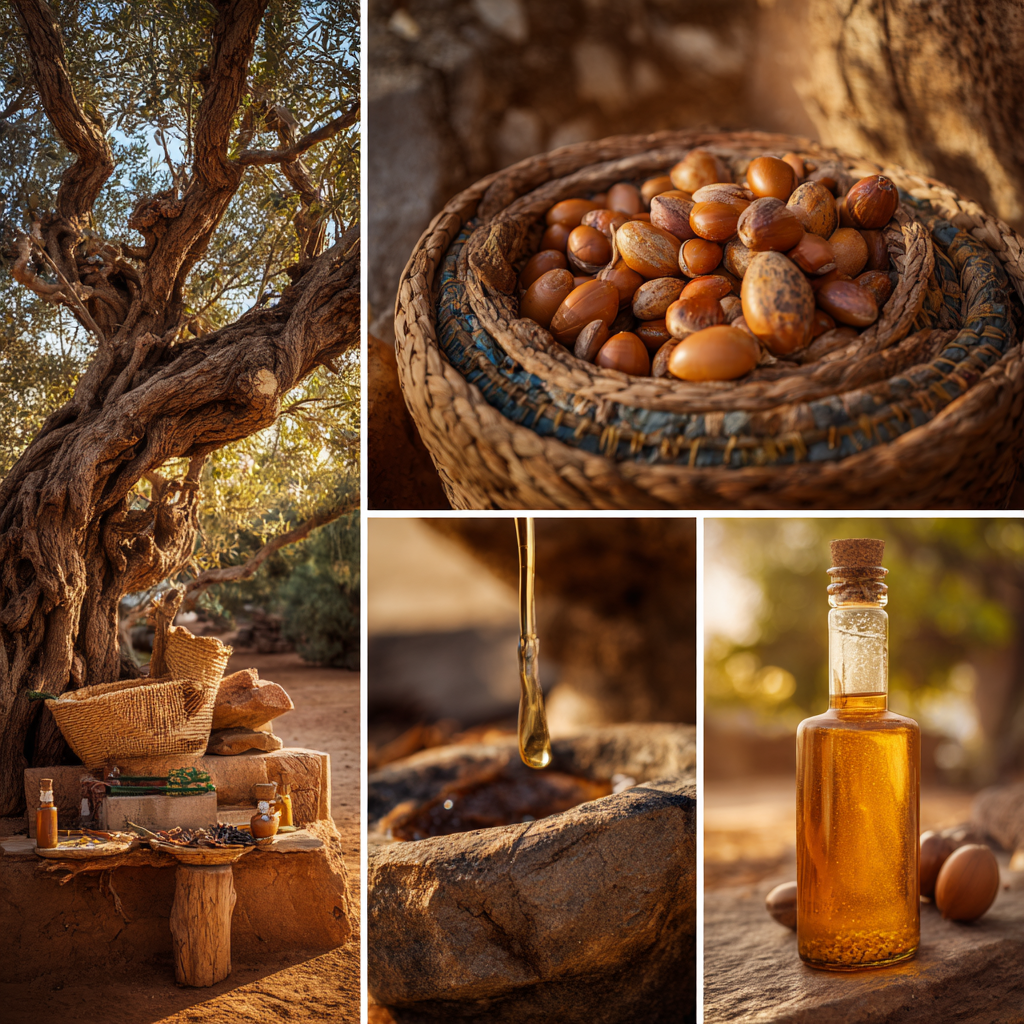
In the arid expanses of Dhofar, in southern Oman, an extraordinary tree has been growing for thousands of years: Boswellia sacra. This gnarled tree, capable of surviving in the most hostile conditions, holds a precious secret. When its bark is incised using ancestral techniques, it weeps "tears" of golden resin: frankincense.
Once hardened, this resin develops a complex and captivating fragrance. The ancient Omanis discovered very early on that this substance, when burned during ceremonies, released fumes with exceptional purifying and spiritual properties. The secret of this "sweat of the gods," as the Egyptians called it, was jealously guarded by the tribes of Dhofar.
The first harvests and traditional expertise
The techniques used to harvest incense, passed down from father to son for over 5,000 years, are a true art form. The harvesters, known as "hakeem," know every tree in their territory. They know precisely when and how to cut the bark to obtain the purest resin, respecting the tree's natural cycles.

This unique expertise made the Omani tribes the undisputed masters of the incense trade. They not only possessed the raw material, but also the expertise needed to transform it into a commercial product of exceptional quality.
The emergence of the incense route: 1500 BC
From Dhofar to Arabia: the first trade routes
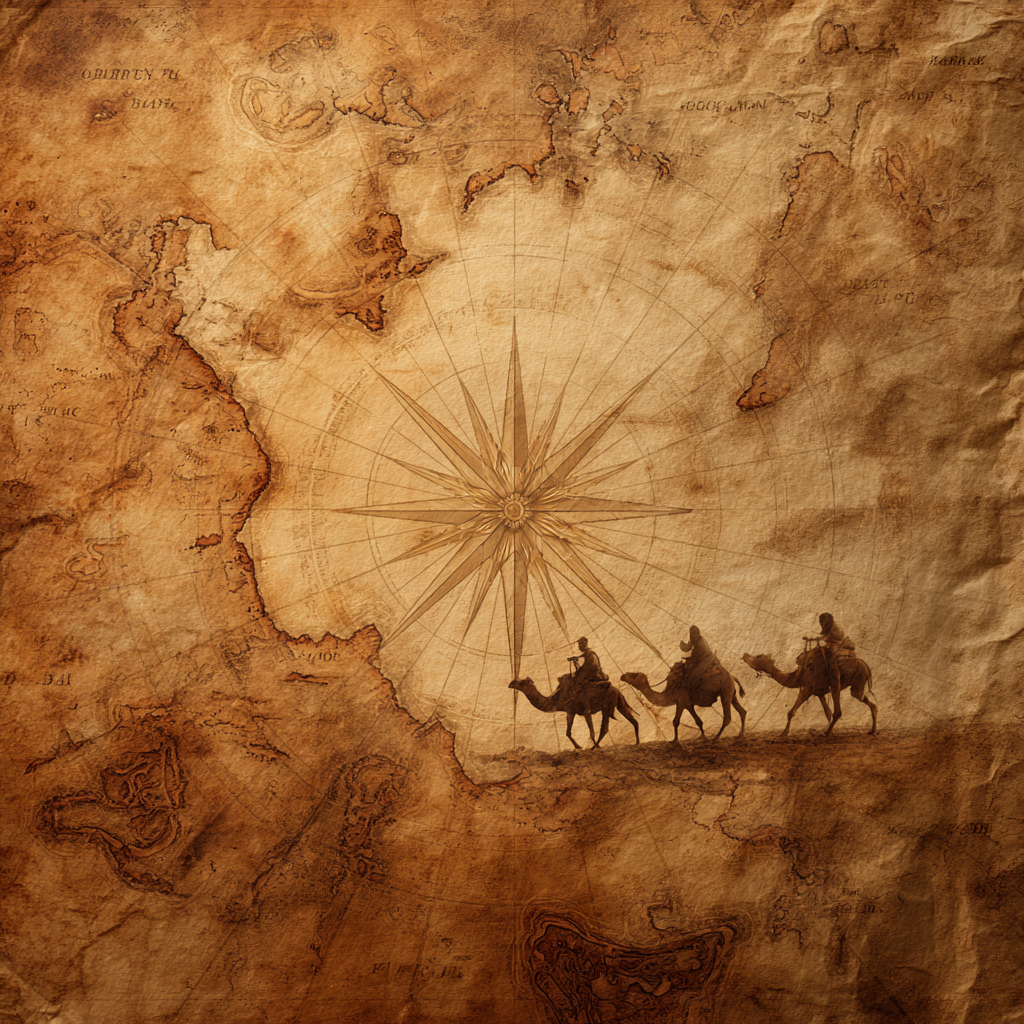
Around 1500 BC, growing demand for incense from civilizations in the Middle East and Mediterranean prompted Omani merchants to organize the first trade convoys. These caravans, consisting of hundreds of camels laden with precious resin, traveled along ancient trails across the Arabian Peninsula.
The journey from Dhofar to the great cities of Mesopotamia, Egypt, or the Mediterranean was a journey of several months, crossing unforgiving deserts, dangerous mountains, and hostile territories. Each stage was meticulously planned, each water source was strategic.
The stopover cities: oases of prosperity
Along these routes, stopover towns developed, deriving their wealth from the passage of incense caravans. Shabwa, Timna, Najran, and further north, Petra and Palmyra, became flourishing commercial centers where cultures mingled and riches were exchanged.

These oasis towns offered incense merchants lodging, food, protection, and commercial services. In exchange, they levied substantial taxes on the precious cargo, enriching themselves considerably through this transcontinental trade.
The golden age: when incense was worth more than gold
Pharaonic Egypt: the first major consumer
Ancient Egypt was one of the first great civilizations to develop a passion for Omani incense. The pharaohs used it in their mummification rituals, believing that its purifying smoke would ease the passage to the afterlife. Egyptian temples burned phenomenal quantities of incense during daily religious ceremonies.
Queen Hatshepsut (1479-1458 BC) even organized a legendary expedition to the "land of Punt"—probably the Dhofar region—to obtain incense directly and attempt to cultivate the precious trees on Egyptian soil. This attempt failed, reinforcing Oman's monopoly on this strategic resource.
Rome and the heyday of the incense trade
At its peak, the Roman Empire became the world's largest consumer of incense. The Romans used it not only in their temples dedicated to the gods, but also in their patrician homes, baths, and lavish banquets. Pliny the Elder reports that in Rome, incense sold for more than gold, and that Emperor Nero burned an amount equal to the annual production of an entire region at the funeral of his wife Poppaea.
This insatiable demand generated huge profits for all intermediaries in the commercial chain. The Nabataean merchants of Petra, masters of caravan organization, amassed considerable fortunes thanks to this lucrative trade.
Multiple routes: a complex commercial network
The main land route: 3,000 kilometers of danger
The main land route for incense stretched over 3,000 kilometers, from the ports of Qana and Moscha (now Oman and Yemen) to the Mediterranean ports of Gaza and Petra. This commercial backbone had many variations depending on political and climatic conditions.
The caravans, consisting of 1,000 to 3,000 camels, moved slowly through the desert, traveling only 25 to 30 kilometers per day. The entire journey took between 60 and 90 days, punctuated by mandatory stops at oases to replenish water and food supplies.
Sea routes: the monsoon alternative
Alongside land routes, sea routes developed, taking advantage of the monsoon winds in the Indian Ocean. Omani sailors, who were excellent navigators, established regular connections between the ports of Dhofar and the Indian coast, then on to the Red Sea and the Mediterranean.
These sea routes, although riskier due to storms and pirates, allowed larger quantities of incense to be transported in less time. They helped make Oman a respected maritime power throughout the Indian Ocean.
The cultural and spiritual impact: far beyond commerce
Incense in world religions
The expansion of the Incense Route coincided with the development of the great monotheistic religions and sophisticated spiritual practices. Ancient Judaism incorporated incense into its rituals at the Temple in Jerusalem, following very specific instructions described in the Bible.
Early Christianity also adopted the use of incense as a symbol of prayers rising up to the divine. One of the gifts offered by the Magi to the baby Jesus was incense, a testament to its exceptional value and profound spiritual significance.
Islam, which originated in the Arabian Peninsula, maintained this tradition of using incense, particularly in the Gulf region, where it remains a central element of hospitality and religious ceremonies to this day.
Cultural transfers and innovations
The incense routes not only transported goods, but also ideas, techniques, and knowledge. Omani merchants, in constant contact with various civilizations, became exceptional vectors of cultural diffusion.
They introduced Westerners to Eastern navigation techniques, astronomical knowledge, and medical expertise. In return, they brought technical, artistic, and intellectual innovations back to the Gulf, enriching their own civilization.
The gradual decline: from late antiquity to the Middle Ages
Factors contributing to the decline
Several factors contributed to the gradual decline of the Incense Route from the 4th century AD onwards. The spread of Christianity, which became the official religion of the Roman Empire, changed religious practices and reduced the consumption of incense in certain regions.
At the same time, the development of direct sea routes between India and the Mediterranean, bypassing the Arabian Peninsula, reduced the strategic importance of inland trading posts. Growing political instability in the region also made caravan travel more dangerous and less profitable.
The arrival of competitors
The Arab expansion of the 7th and 8th centuries profoundly altered the geopolitical balance of the region. While incense retained its spiritual value in the new Islamic religion, the diversification of supply sources—particularly from India and East Africa—broke Oman's thousand-year monopoly.
Modern renaissance: Oman's incense today
Preservation of ancestral traditions
Despite historical upheavals, the traditions of harvesting and trading incense have survived in Oman. The harvesting families of Dhofar continue to carry on the age-old practices of their ancestors, preserving a skill that is unique in the world.
The Omani government, aware of the exceptional heritage value of this legacy, inscribed the "Land of Frankincense" on the UNESCO World Heritage List in 2000, thereby recognizing the universal historical importance of these sites.
A renewed global market
Today, Omani incense is enjoying a remarkable revival. The contemporary quest for natural well-being, authentic spirituality, and high-quality traditional products is bringing this Omani treasure back into fashion.
Modern consumers, captivated by the thousand-year history of incense and its recognized aromatherapeutic properties, are rediscovering the virtues of this exceptional resin. Real and Roots is committed to promoting and passing on these authentic traditions.
Living heritage: lessons from the incense route
Fair trade before its time
The Incense Road is a remarkable example of ancient fair trade. Unlike other forms of trade in antiquity, which were often based on exploitation, the incense trade was founded on relationships of mutual respect between trading partners.
Omani harvesters retained control over their production, stopover cities benefited from transit without being plundered, and end consumers received an authentic product of exceptional quality. This virtuous economic model now inspires new approaches to international trade.
Sustainability and environmental preservation
Traditional incense harvesting techniques also serve as a model for sustainable natural resource management. Over the centuries, Omani harvesters have developed methods that preserve the health of Boswellia trees, enabling continuous production for millennia.
This environmentally friendly approach, which views trees as partners rather than mere resources to be exploited, offers valuable lessons for our era, which faces ecological challenges.
from antiquity to your home
The history of the Incense Route goes far beyond that of a simple commercial epic. It is the fascinating story of the first wave of globalization, which united East and West through the subtle links of perfume and spirituality.
Every grain of Omani incense you burn today carries with it this thousand-year-old memory. It tells the story of caravans in the desert, sailors braving storms, and artisans perfecting their craft generation after generation.

By choosing our bakhour and frankincense from Oman, you are perpetuating this exceptional tradition and helping to preserve a unique universal heritage. You become, in your own small way, the heir to this incense route that continues to forge links between peoples and cultures.

The adventure of incense is not over. It continues today in your home, where each fragrant smoke revives the magic of this extraordinary epic.
Discover our authentic incense from Oman
At Real and Roots, we appreciate this ancient tradition and offer you the purest incense from Oman and Oliban resin, harvested and infused according to ancestral methods by traditional families in Dhofar. Each resin we select carries with it the heritage of the incense route and connects you to this fascinating history.
Explore our collection of incense from Oman and be part of continuing this thousand-year-old epic.