Bakhour: complete guide — history, types, use, and difference from incense
Bakhour: complete guide — history, types, use, and difference from incense
Le bakhour est un encens oriental artisanal à base de bois, résines et huiles naturelles, issu de la tradition omanaise. Le marché mondial de l'encens dépasse 12,7 milliards USD en 2024.
Le marché mondial de l'encens a été estimé à 12,73 milliards de dollars en 2024, avec une croissance annuelle projetée de 6,1 % jusqu'en 2033. Au cœur de cet engouement, le bakhour occupe une place singulière : ni simple bâtonnet, ni résine brute, c'est un mélange artisanal de bois précieux, d'huiles parfumées et de résines naturelles, hérité de la tradition arabe.
Bakhour (بخور in Arabic, also spelled bakhoor or bukhoor) is much more than just a room fragrance. It is an ancient art of living, rooted in Middle Eastern traditions, which transforms any space into a place of serenity and refinement. Composed of wood chips infused with fragrant oils, precious resins, and natural ingredients, bakhour releases a rich, enveloping smoke when burned, which leaves a lasting scent on interiors and clothing.
However, despite its growing popularity in Europe and France, bakhour remains relatively unknown. What distinguishes it from traditional incense? How should it be burned correctly? Which types should you choose? This guide covers everything you need to know, from the caravan routes of Antiquity to your living room.
Reading time: 15 minutes
What exactly is bakhour?
The word "bakhour" comes from Arabic بخور (boukhour), which literally means “fragrant smoke” or “incense.” It refers to a mixture of scented wood chips , usually infused with essential oils and combined with natural ingredients such as resins, spices, musk, amber, or sandalwood.
Unlike incense sticks, which are common in the West, bakhour comes in a variety of forms: chips, compact blocks, breakable tablets (shaped like "chocolate"), powder, beads, or paste. Once burned on hot charcoal or in an electric burner, it releases a dense, aromatic, and long-lasting smoke.
The ingredients of bakhour
The richness of bakhour comes from the diversity of its components. Here are the ingredients most commonly found in artisanal compositions:
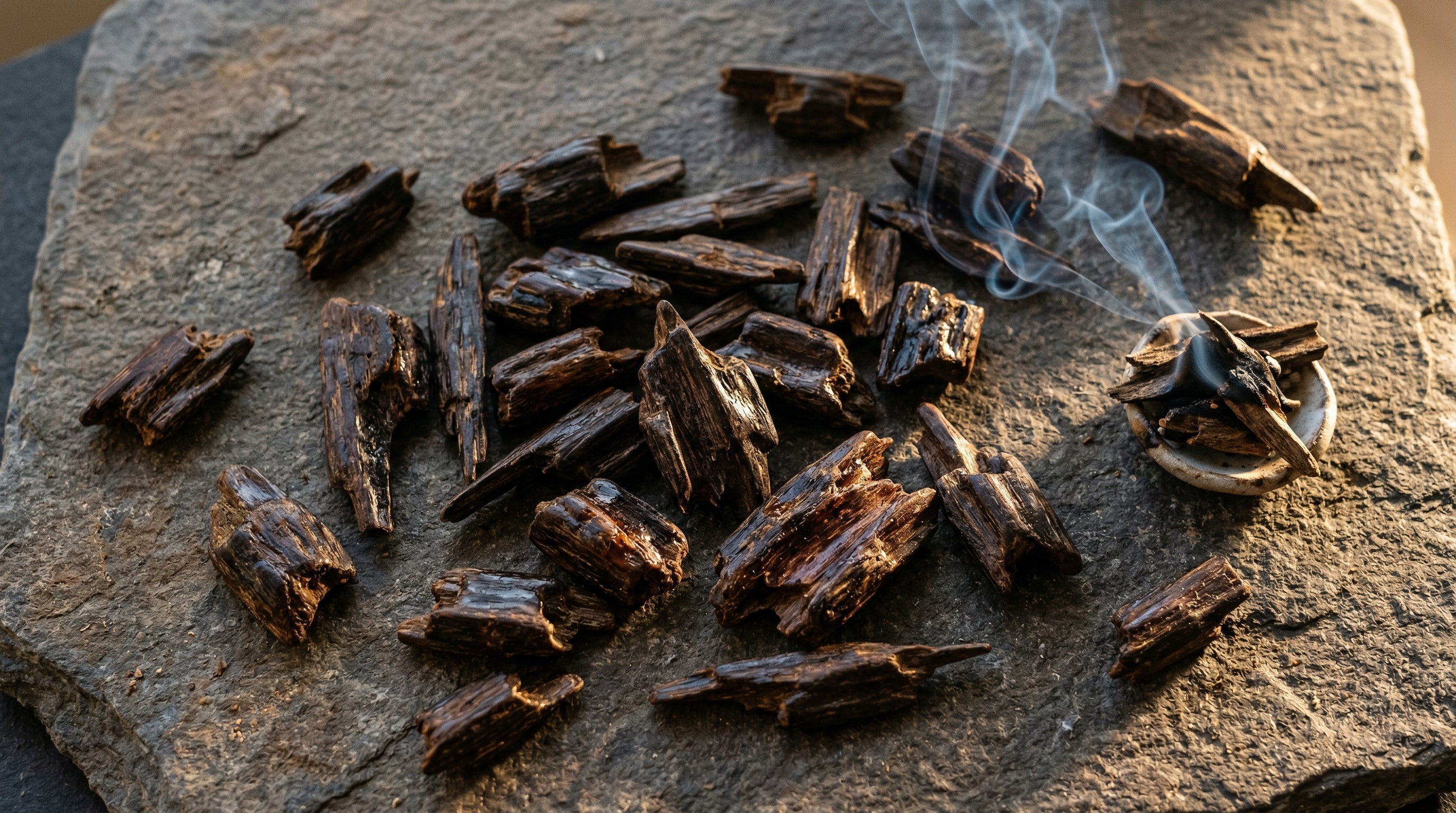
• Oud wood (agarwood) — The star ingredient. Extracted from the Aquilaria tree, it is one of the most precious woods in the world, prized for its deep and complex fragrance.
• Sandalwood — Adds softness, warmth, and a distinctive creamy note.
• Frankincense resin (incense) — Adds a spiritual and purifying dimension.
• Musk — Adds depth and sensuality to compositions.
• Ambergris — A warm, enveloping note, often used as a base note.
• Floral essential oils — Rose, jasmine, and orange blossom for lighter blends.
• Spices — Cinnamon, cardamom, and saffron for hotter, spicier bakhurs.
• Bois d'aloès — Apporte complexité et une touche boisée raffinée.
Le bois d'oud est l'ingrédient central du bakhour. Pour mieux comprendre sa nature, son origine et ses différentes qualités, consultez notre guide complet sur l'encens oud.
The history of bakhour: from caravan routes to our homes
Original antiques
The use of bakhour dates back to ancient times. In the Arabian Peninsula, the burning of fragrant woods was an integral part of daily life long before the advent of Islam. The incense routes, which linked southern Arabia (now Yemen and Oman) to the Mediterranean, already carried resins, aromatic woods, and perfumes to Egypt, Greece, and Rome.
The trade in aromatic materials was so lucrative that the Romans called southern Arabia "Arabia Felix" (Happy Arabia), in reference to the wealth generated by this trade. Bakhour was then a sign of prestige, offered to kings and burned in temples.
Bakhour in Arab and Islamic tradition
With the advent of Islam, bakhour took on an additional spiritual dimension. Incense-burning became a fundamental gesture of hospitality in Arab culture: welcoming a guest by presenting them with bakhour in a mabkhara (traditional incense burner) is a sign of respect and generosity.
Even today, bakhour remains an essential part of life in the Gulf countries. It is burned daily in homes, at weddings, religious celebrations (Eid, Ramadan), receptions, and even in offices and shops. In Arab tradition, the incense burner is passed from hand to hand so that each guest can enjoy the fragrant smoke.
The rise of bakhour in the West
Popularized in France and Europe over the past fifteen years, particularly by pilgrims returning from Saudi Arabia, bakhour has enjoyed tremendous success. Its diffusion method, which is more intense and longer lasting than incense sticks, is attracting more and more fans of home fragrances who are looking for authenticity and depth of scent.
Bakhour vs incense: what are the differences?
This is the most frequently asked question, and the confusion is understandable. Here is a detailed comparison table to help you understand everything:
|
Criterion |
Classic incense |
Bakhour |
|
Definition |
Natural resin or vegetable paste stick |
Wood chips impregnated with scented oils + resins |
|
For me |
Sticks, cones, resin grains |
Chips, blocks, tablets, powder, paste |
|
Composition |
Pure resin (frankincense, myrrh) or simple blend |
Oud wood, sandalwood, musk, amber, oils, spices |
|
Intensity |
Mild to moderate |
Strong to very strong — fills a room |
|
Duration |
30 minutes to 1 hour (stick) |
Several hours, permeates fabrics |
|
Combustion |
Self-ignition (lights directly) |
Requires charcoal or an electric burner |
|
Cultural origin |
Universal (Asia, Africa, Europe) |
Arabian Peninsula and Middle East |
|
Price |
Economical |
Moderate to high (depending on the oud wood) |
|
Principle of use |
Meditation, spirituality, light atmosphere |
Intensely perfume your home, clothes, and hospitality |
In short, bakhour is a type of incense, but not all incense is bakhour . Bakhour is distinguished by its rich composition (oud wood, fragrant oils), its superior aromatic intensity, and its deep roots in Arab culture. Traditional incense (frankincense, myrrh, sticks) is more universal and generally lighter.
The different types of bakhour
By main ingredient
• Oud Bakhour (Agarwood) — The most prestigious. Agarwood shavings are infused with oud oils. A deep, woody, animalic, and enveloping fragrance. It is the benchmark bakhour in the Gulf countries.
• Sandalwood Bakhour — Softer and creamier. Ideal for relaxation and meditation. Warm and soothing notes.
• Musk Bakhour — Sensual and long-lasting. Often used at weddings and special occasions.
• Amber Bakhour — Warm and enveloping. Perfect for creating a cozy atmosphere in winter.
• Floral incense — Made with rose, jasmine, or orange blossom. Lighter, suitable for everyday use and living spaces.
• Spicy Bakhour — Cinnamon, cardamom, saffron. Stimulating and energizing, ideal for reception areas.
By shape
• Wood chips — The most traditional form. Impregnated wood chips.
• Chocolate bars — Convenient breakable bars for easy portioning. Very popular in France.
• Powder (mabthooth) — Finely ground wood, often mixed with powdered oud. To be used on an electric burner.
• Paste / pellets — Compact, concentrated formulations. Long burn time.
• Mamool — A mixture made from wood and agglomerated resins, often cylindrical in shape.
By origin
• Omani Bakhour — Renowned for its subtlety and complexity. Oman is the historic birthplace of the incense trade. It is this expertise that Real & Roots has chosen to offer you with its handcrafted collection.
• Emirati bakhour — Often richer and sweeter. The Emirates are the world’s largest market for bakhour.
• Saudi Bakhour — Intense and rich. Widely used during major religious occasions.
• Yemeni Bakhour — Handcrafted and unrefined. Time-honored manufacturing traditions.
• Indian Bakhoor — Hand-rolled bakhoor sticks (Asli Bakhoor), often made from Indian herbs and resins.
How to burn and use bakhour: a step-by-step guide
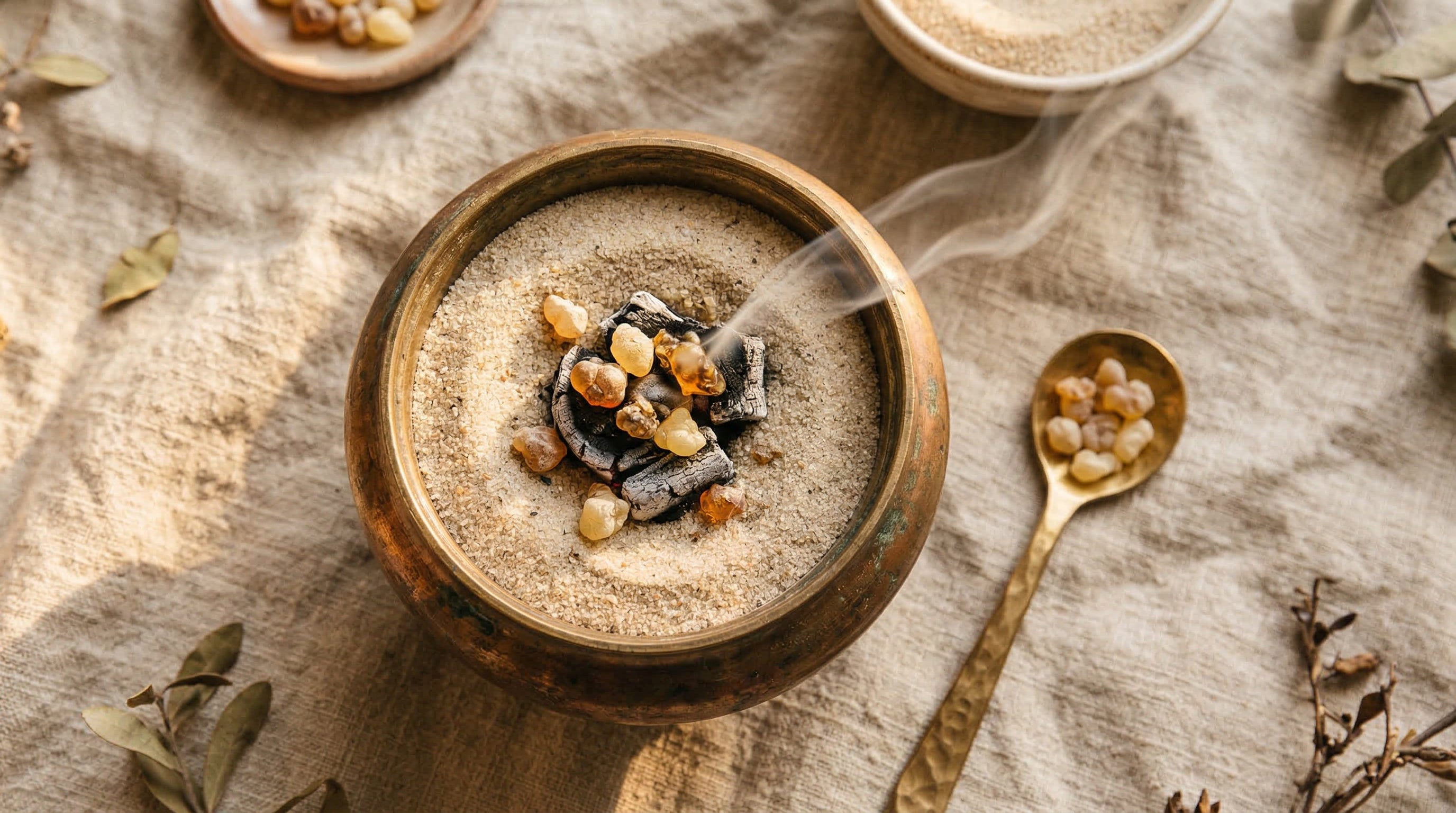
Method 1: On burning charcoal (traditional)
This is the traditional method, which offers the most intense and authentic aroma.
What you need:
• A censer (mabkhara) or any heat-resistant container
• Self-igniting charcoal briquettes
• A lighter or matches
• A metal clip
• Your bakhour
Steps:
1. Light the charcoal briquette with a lighter, holding it with the tongs. Be careful of sparks.
2. Wait until the charcoal is completely glowing (covered with a thin layer of gray ash). This takes about 2 to 3 minutes.
3. Place the charcoal in the incense burner on a non-flammable surface.
4. Gently place a few shavings or a piece of bakhour on the charcoal.
5. Let the fragrant smoke waft through the air. You can move the incense burner from room to room or pass it around to scent your clothes.
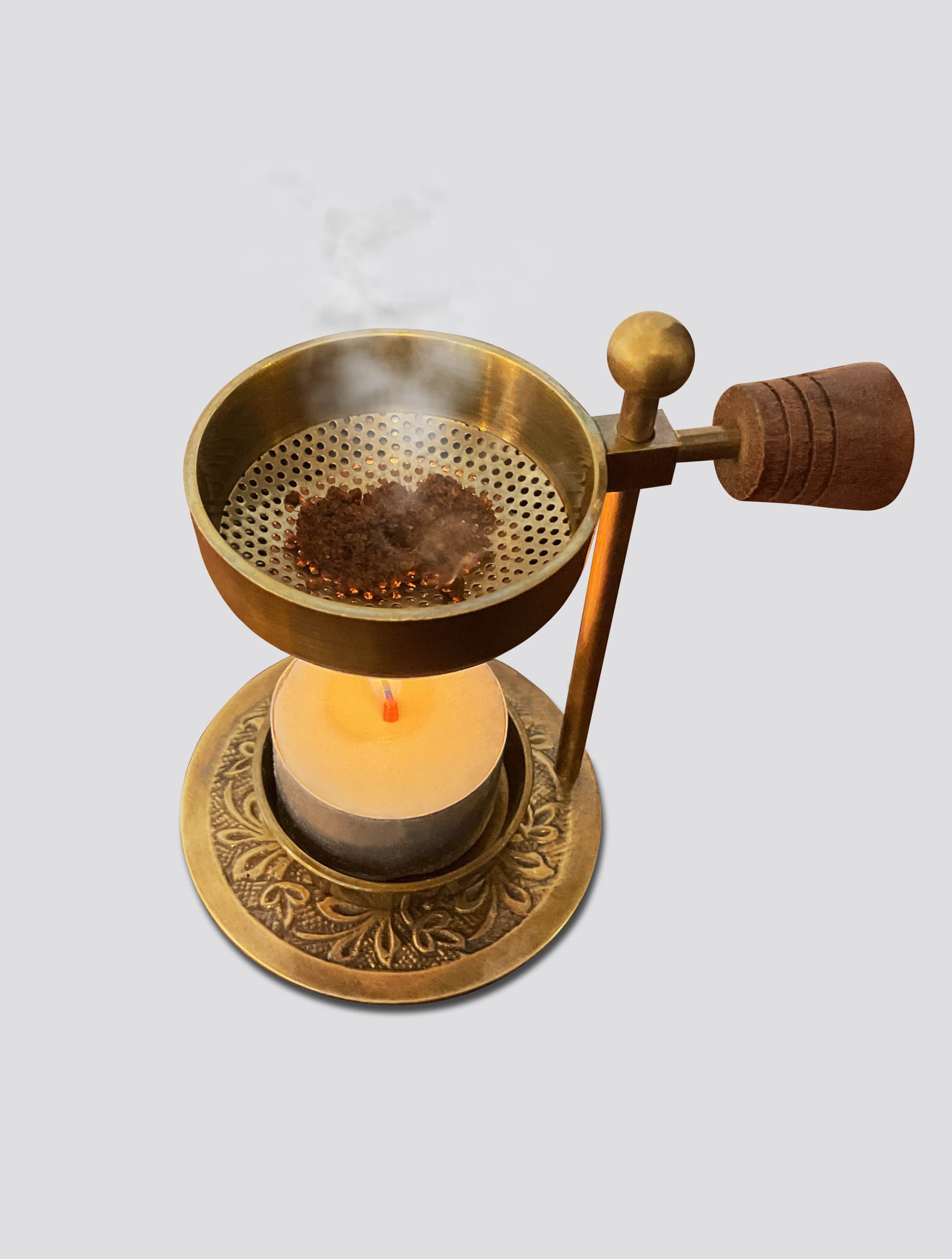
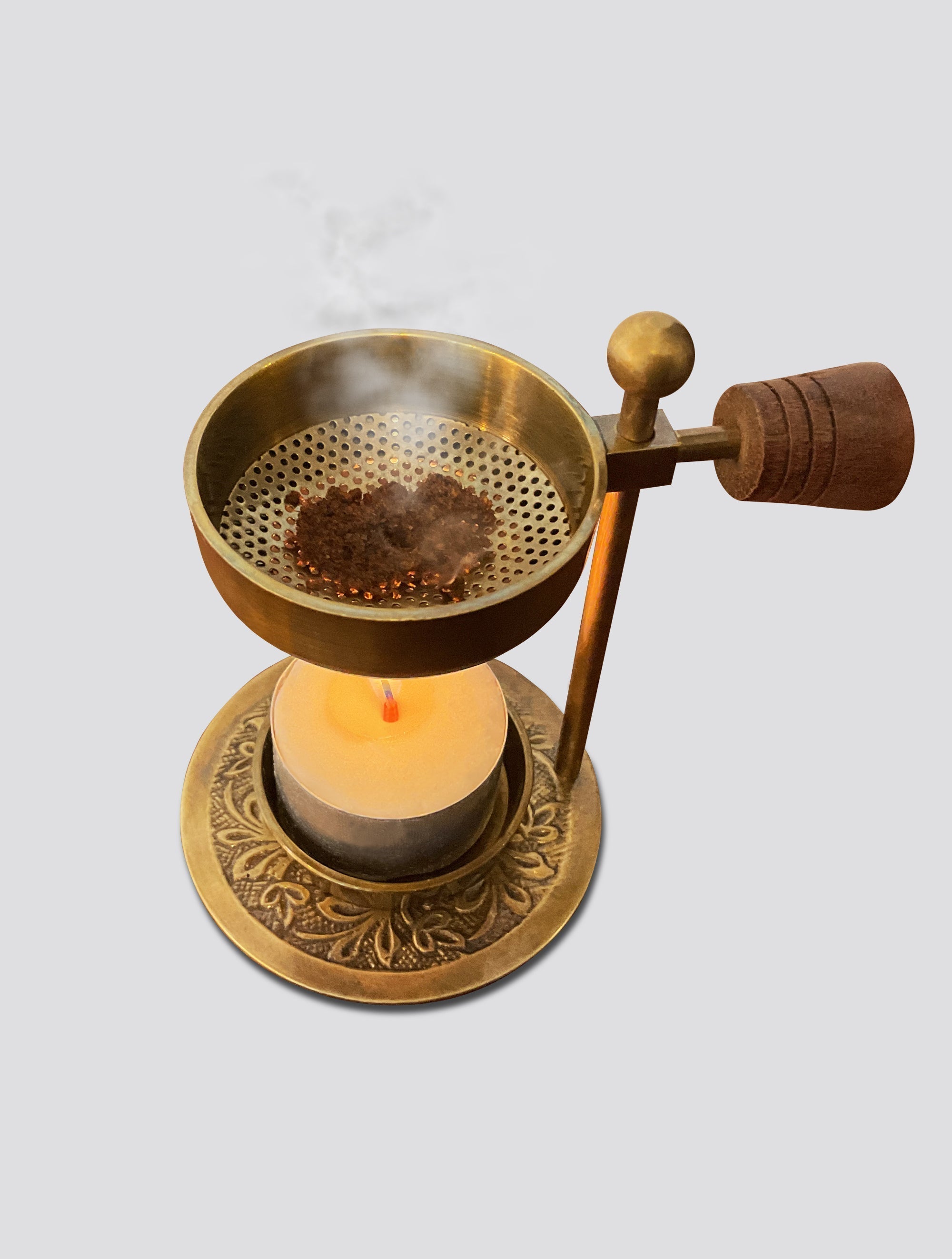
Method 2: Using an electric burner (modern)
More convenient and safer, the electric burner heats the bakhour without a flame or charcoal. Simply plug in the burner, place the bakhour on the tray (ideally on a piece of aluminum foil for easy cleanup), and let the heat gradually release the aromas.
This method provides a gentler and longer diffusion. It is ideal for everyday use and in spaces where an open flame is not desired (bedroom, office).
Directions for use
• Dosage — One teaspoon of powder or 2–3 small chips is enough for a standard-sized room. Bakhour is very concentrated: it’s best to start with a small amount.
• Ventilation — Make sure the room is properly ventilated. The smoke is aromatic but dense.
• Safety — Keep the incense burner out of reach of children and pets. Never leave a charcoal briquette unattended.
• Scenting clothes — Hang your clothes over the smoke for a few minutes. The scent will last for several days.
• Conservation — Conservez votre bakhour dans un endroit frais et sec, à l'abri de la lumière, dans un contenant hermétique pour préserver ses arômes. Pour aller plus loin sur les techniques de combustion et les accessoires, notre guide pratique sur comment brûler l'encens et le bakhour détaille chaque étape.
The benefits of bakhour
While bakhour is a pleasure for the senses, its natural ingredients also offer genuine benefits for well-being.
Air purification
Bakhour is known for its antibacterial properties . Used for centuries in Asia and the Middle East, it helps neutralize airborne pathogens and maintain a healthier indoor environment. This is largely due to the frankincense resin it often contains, which is known for its antiseptic and antiviral properties.
Relaxation and stress management
The very ritualization of preparing and burning bakhour invites meditation and letting go . The woody and amber scents help ground the mind and reduce anxiety. It is a natural tool for stress management, used for thousands of years.
Sleep aid
Certain types of bakhour, particularly those containing cinnamon or sandalwood , are particularly effective at promoting sleep. Burning a little bakhour 30 minutes before bedtime can help create an atmosphere conducive to rest.
Concentration and creativity
More dynamic notes (citrus, spices) can stimulate concentration and creativity. In Arab tradition, bakhour is often burned in workspaces to keep the mind sharp and alert.
Hospitality and friendliness
Beyond its physical benefits, bakhour creates social bonds. Offering incense to guests is a universal gesture of welcome in Arab culture, transforming every visit into a moment of sharing and mutual respect.
The Real Bakhour and Roots Collection: Omani Craftsmanship
At Real and Roots, we’ve chosen authenticity. Our collection of bakhour comes from Oman, the historic birthplace of the incense trade and a land of millennia-old olfactory traditions. Each blend is handcrafted by our Omani partners, using expertise passed down from generation to generation.
Bakhour majlis essence
Our signature bakhour, designed to bring serenity and balance . Its top notes of musk, heart notes of oud wood, and base notes of ambergris make it the perfect companion for moments of calm and contemplation. The Majlis (Arabic reception room) is the quintessential place of hospitality: this bakhour captures its essence.
Echoes of Bakhour
Inspired by the legacy of bakhour, Echoes captures timeless memories in its fragrance. Deep notes of pomegranate and blackcurrant give it a unique, contemporary personality, while remaining true to traditional values.
Bakhour citrus bursts
For those who prefer something refreshing, our famous Citrus Chunks feature vibrant notes of lemon and orange , softened by sweet figs and dates at the heart. A bright incense, perfect for everyday use and living spaces.
Frequently asked questions about bakhour
What is the difference between bakhour, bakhoor, and bukhoor?
These are three different spellings of the same Arabic word بخور. In France, "bakhour" or "bakhoor" are most commonly used. There is no difference in the product: in all cases, it is oriental incense made from fragrant woods.
Is bakhour dangerous to health?
When used in moderation and in a well-ventilated space, bakhour is not dangerous. As with any incense, it is not recommended to burn bakhour in a closed room without ventilation, or to use it in the presence of people suffering from asthma or severe respiratory disorders. Choose bakhour made from natural ingredients.
What is the difference between bakhour and oud?
Oud (or agarwood) specifically refers to raw chips of agarwood, a highly prized natural material that undergoes little processing. Bakhour is a compound product that often contains oud, but also other ingredients (sandalwood, musk, oils, resins). Oud is a raw material; bakhour is a perfumed composition.
How to choose a good bakhour?
Choose bakhours made from natural ingredients, sourced from reputable artisan manufacturers (Oman, Yemen, United Arab Emirates). Be wary of very cheap bakhours, which often contain synthetic compounds. A good bakhour should have a pleasant smell even when not burned, and its shavings should be slightly oily to the touch.
How long does the scent of bakhour last?
The fumigation itself lasts between 15 and 45 minutes, depending on the quantity. But the scent permeates fabrics, curtains, and walls for several hours, sometimes several days. This is one of the great advantages of bakhour over candles or incense sticks.
Can you burn bakhour without charcoal?
Yes, thanks to electric burners. These devices heat the bakhour without a flame, providing a gentler and safer diffusion. This is the recommended method for everyday use, especially if you have children or pets at home.

Want to take it a step further?
Discover how to incorporate frankincense and natural resins into your daily routine to purify your space and create a moment of calm.