How to Burn Incense: A Complete Guide to Resin and Beads
How to Burn Incense: The Complete Guide to Resin, Beads, and Bakhour

Updated: March 2026 | Readingtime : 8 minutes
There is a ritual that has been repeated for over three thousand years, in the mosques of Oman as well as in the temples of Egypt, in the churches of Jerusalem as well as in the living rooms of Muscat. Lighting a charcoal briquette, placing a few grains of resin on it, and letting the smoke rise slowly. This simple ritual is an act of mindfulness: we slow down, we breathe, we return to the present moment.
However, burning resin incense isn’t something you can just wing. The method, equipment, and type of resin all have a profound impact on the olfactory experience. In this guide, we’ll explain how to burn incense properly—whether you’re using charcoal, a candle, or an electric burner—and how to choose the method that best suits your needs.
Discover our Omani frankincense resins
Why burn resin incense instead of incense sticks?
The incense sticks found in supermarkets are usually a mixture of plant powders, chemical binders, and synthetic fragrances. Sometimes they don’t even contain any resin. What we’re actually burning, then, is an industrial product that borrows the name of incense without having any of its substance.
Incense in the form of grains or resin is something entirely different. It consists of the hardened sap of a tree, harvested by hand without any processing. When a grain of frankincense is placed over a heat source, hundreds of natural aromatic compounds are gradually released. The scent profile is incomparable: complex and evolving, it shifts from fresh, citrusy notes to deep, resinous notes as it burns. It is this depth that sacred traditions have sought since ancient times.
See also: The spiritual significance of frankincense
Three Ways to Burn Resin Incense
There are three main ways to burn incense cones or resin. Each offers a different experience in terms of intensity, smoke, and aromatic subtlety.
Method 1: Using hot coals (the traditional method)
This is the oldest and most widespread method in Arab, African, and Mediterranean cultures. It produces thick smoke and a powerful diffusion of fragrance.
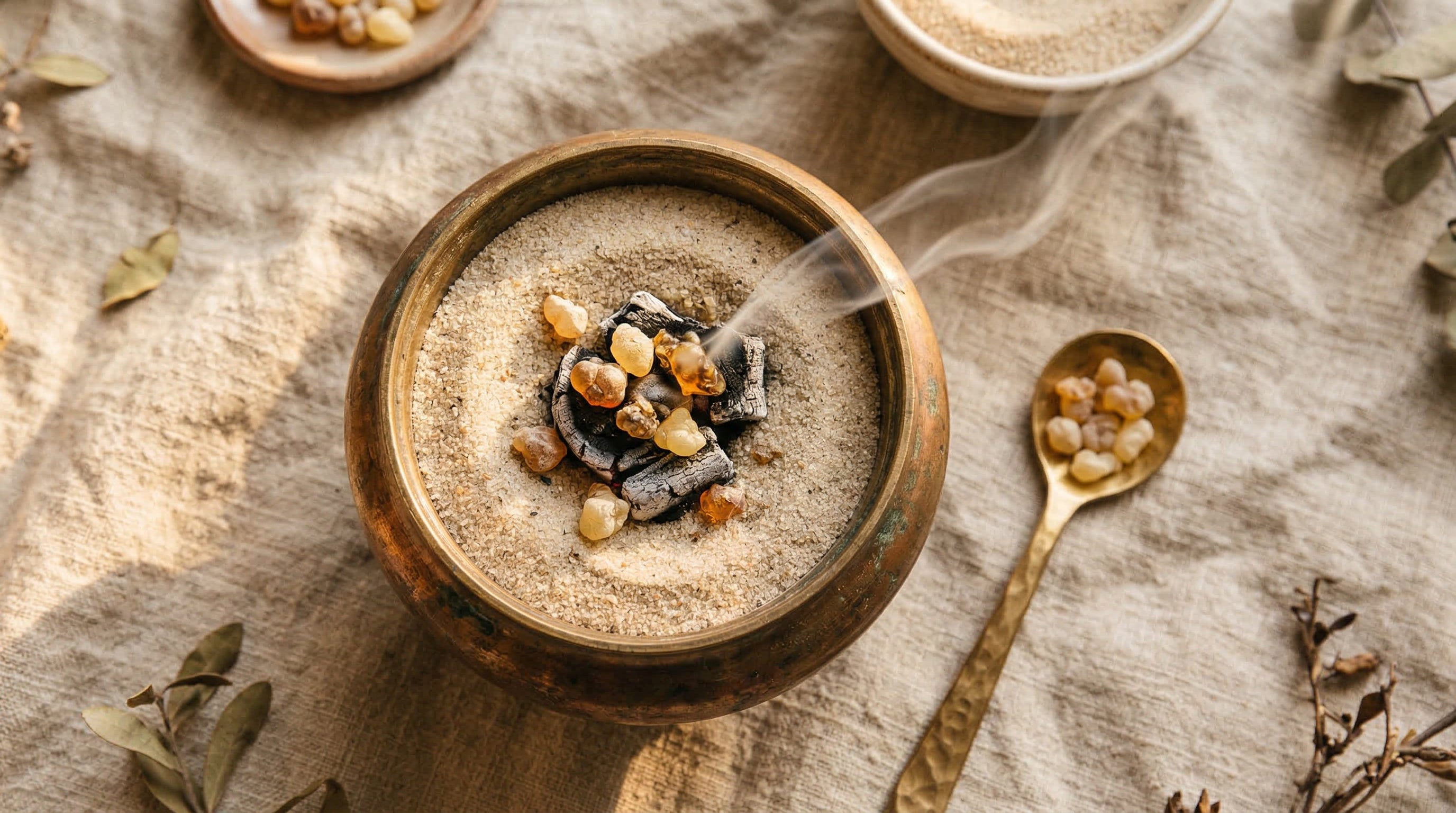
Materials needed: a ceramic or metal incense burner, an incense charcoal tablet, charcoal tongs, fine sand to secure the tablet, and a small spoon to place the resin.
Steps: Pick up the charcoal pellet with the tongs and light it using a lighter or a candle. Wait until the charcoal glows red all over, which usually takes one to two minutes. Place it in the incense burner on a bed of sand. Then place two or three resin pellets on the glowing charcoal. The smoke rises immediately.
Tip: The first smoke carries the scent of charcoal. Let it dissipate for thirty to forty-five minutes. What remains afterward is the true aroma of the resin: sweet, woody, and lingering. That’s when the incense reveals its true nature.
This method is ideal for purification rituals, prayers, and large spaces. It is particularly well-suited for frankincense pellets and traditional resin blends.
Discover our gold-plated brass clips
Method 2: Using a candle and an adjustable burner (without charcoal)
For those who want to enjoy resin incense without the smoke from charcoal, the candle method offers a gentler and more controlled alternative.
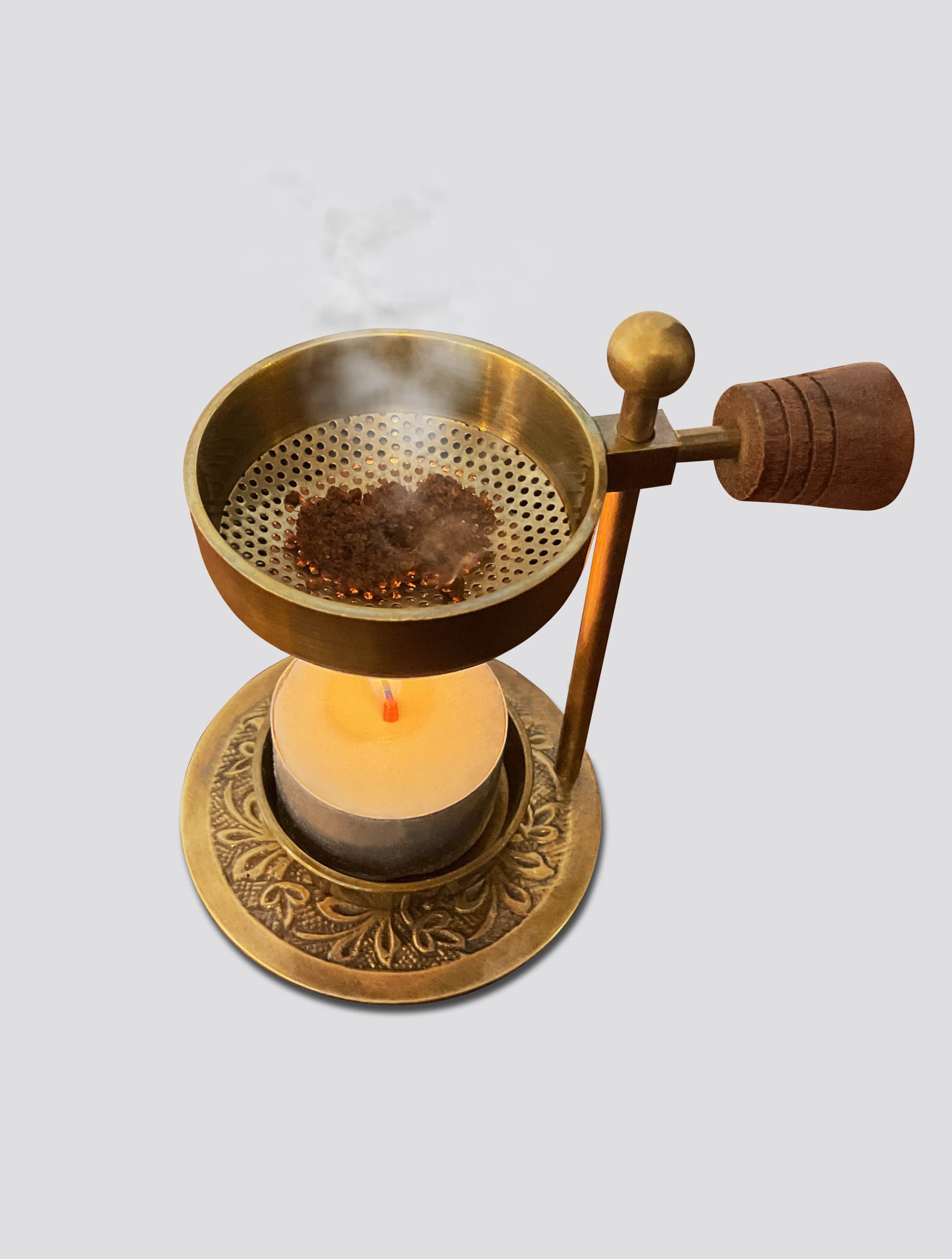
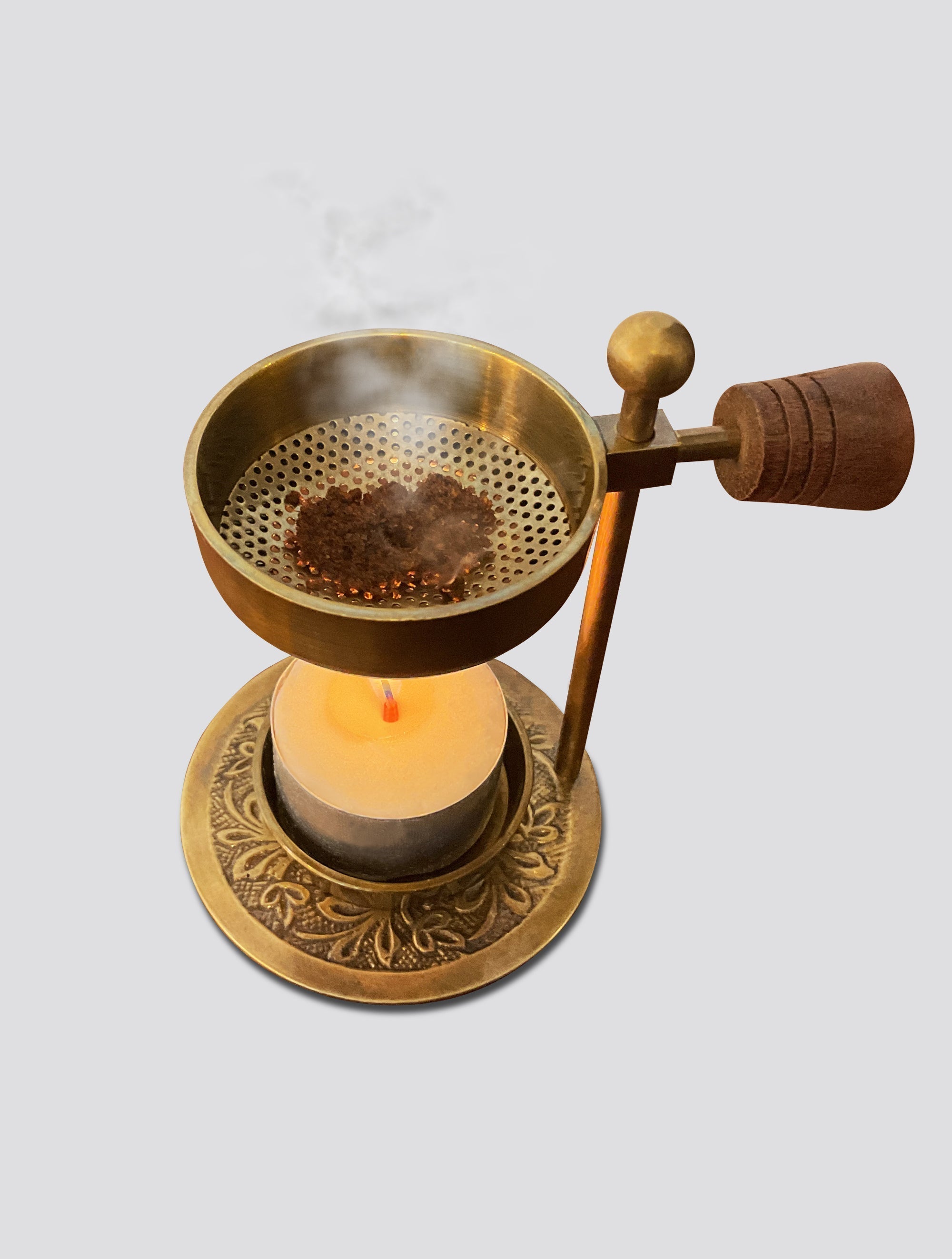
Materials needed: an incense burner with an adjustable height grid, a single unscented tea light.
Principle: The rising heat from the candle warms the resin placed on the grid above the flame, without burning it directly. The resin should melt gently, almost “boiling,” without charring. The aroma released is more subtle and woody, with notes of pine and lemon that gradually emerge.
Adjustment: If the candle is new, its flame will be brighter: move the grate farther away. As the candle burns down, move the grate closer to the flame. The key is that the wax should melt slowly, not burn.
This is the method we recommend for daily use at home. Less smoke, a more subtle aroma, and a scent experience that evolves over time. Our handcrafted brass incense burners are designed specifically for this method: the height-adjustable grate allows you to adjust the intensity according to your preferences and the type of resin used.
Discover our handcrafted brass incense burners
Method 3: Using an electric burner
The electric burner is the most modern method. It heats incense at a controlled temperature, without a flame or smoke, and features an automatic shut-off. It is the safest and most convenient option for indoor use, whether in an office or a bedroom.
This type of burner is particularly well-suited for bakhour, the traditional Gulf blends made from agarwood, resins, fragrant oils, and spices. Bakhour releases an intense, lingering fragrance that permeates clothing and spaces for hours. In Oman, local innovation companies have developed smart burners specifically designed for these blends, allowing bakhour to be burned without charcoal and without supervision.
Please note: Electric burners are not suitable for all types of pure resins. Some models are designed exclusively for wood blends. Always check the manufacturer’s specifications.
Everything You Need to Know About Bakhour
Which incense should you choose based on the method?
Not all resins burn the same way. The choice of method depends on the type of incense you want to use, the desired intensity, and the setting.
|
Type of incense |
Recommended method |
Intensity |
Ideal for |
|
Oliban Hojari (white, golden) |
Candle or charcoal |
Moderate to heavy |
Purification, prayer, meditation |
|
Yellow frankincense (beads) |
Coal |
Strong |
Wide-open spaces, rituals |
|
Bakhour (Echoes, Majlis, Infinite Blue, Tears of Agar) |
Electric or coal |
Very intense |
Hospitality, a homey atmosphere |
|
Scented gum arabic |
Coal |
Light to moderate |
A soft scent |
|
Resin blend (frankincense + myrrh) |
Coal |
Strong |
Complete purification |
The essentials for burning incense
It's a simple task, but it requires the right tool. Here's what you need to make it a success.
The incense burner. Choose a ceramic or metal holder that is stable and heat-resistant. Our solid brass incense burners (11 cm tall) feature a height-adjustable grate, a built-in candle holder, and a wooden knob. The candle is included. They are available in glossy gold and silver finishes.
Charcoal. Charcoal incense cones are available at specialty stores or online. Choose cones that crackle and glow evenly. Allow one cone per session lasting twenty to forty minutes.
The coal tongs. Essential for handling hot charcoal. Our double-pronged gold-plated brass tongs are designed for safe and precise handling.
Sand. A bed of fine sand at the bottom of the censer insulates the heat from the charcoal and protects the base. It also stabilizes the incense pellet during combustion.
The tea light. For the charcoal-free method, use a plain, unscented candle. A scented candle would mix its aroma with that of the resin and spoil the experience.
Discover our brass accessories
Safety tips
The incense burner gets very hot when in use. A few precautions are necessary to enjoy your incense safely.
Place the burner on a flat, stable, heat-resistant surface. Keep it out of the reach of children and pets. Never leave a lit burner unattended. Keep it away from flammable materials such as curtains, paper, and untreated wood. Allow it to cool completely before moving or handling the burner.
After burning, air out the room for a few minutes. Natural resin produces fewer harmful compounds than industrial incense sticks, but proper ventilation is still essential, especially in small spaces.
Common mistakes to avoid
Putting in too much resin at once. Two or three grains are enough. Too much resin saturates the air, fills the room with smoke, and ruins the subtlety of the aroma. You can always add more grains as the session progresses.
Burning on a coal that isn't hot enough. If the charcoal isn’t completely red-hot, the resin won’t melt properly. Be patient: wait until the pellet is red-hot all over before placing the beads on it.
Placing the resin too close to the flame (candle method). Direct heat will char the resin instead of melting it. The result is acrid smoke and an off-odor. The resin should melt gently, not burn.
Confusing industrial incense sticks with natural incense. Many people think they know incense because they’ve burned sticks. The experience of natural olibanum resin is radically different: more complex, deeper, more vibrant.
Burning in a draft. The wind disperses the smoke, extinguishes the charcoal, and can scatter embers. Choose a quiet spot, sheltered from drafts, to let the fragrance unfold.
Frequently Asked Questions
How do you burn incense cones without charcoal?
There are two alternatives to charcoal. The first is a candle-powered incense burner with an adjustable grate: the heat from the candle warms the resin placed on top without burning it directly, producing a milder aroma and less smoke. The second is the electric burner with adjustable temperature, ideal for bakhour and wood blends. In both cases, the experience is more controlled than with charcoal, and particularly suited for daily indoor use.
Discover our brass incense burners (candle-powered, charcoal-free)
How do you use a censer?
Place a layer of fine sand at the bottom of the incense burner to insulate the heat. Light a charcoal tablet using tongs and a lighter, wait until it is completely glowing red, then place it on the sand. Place two or three grains of resin on the glowing charcoal. The smoke will rise within a few seconds. Add more resin as needed during the session, without overloading it.
What is the best incense for purification?
For a purification ritual, pure frankincense resin is the most authentic choice. Hojari-grade resin from Oman, whether white or golden, is particularly prized for the density of its smoke and the purity of its aroma. For a more thorough purification, frankincense can be combined with myrrh. The key is to choose a natural resin, free of binders or synthetic fragrances, and to burn it in each room with a clear intention.
Discover our purification ritual
Can you burn bakhour without charcoal?
Yes. Bakhour burns very well in an electric burner, which offers precise temperature control and produces neither flame nor charcoal smoke. You can also use the candle method with a grid burner, placing a small piece of bakhour on the grid. The fragrance is just as intense, but it diffuses more gradually. Our Echoes, Majlis, Infini Bleu, and Larmes d’Agar bakhour varieties are particularly well-suited to both methods.
Is resin incense harmful to your health?
Natural incense resin, when burned under the right conditions, produces significantly fewer harmful compounds than industrial incense sticks loaded with binders and synthetic fragrances. That said, all combustion releases particles into the air. It is therefore essential to ventilate the room after each use, avoid inhaling the smoke directly, and limit prolonged sessions in small, enclosed spaces. Used with care, resin incense is a safe part of daily life.
From gesture to material
Burning incense is, above all, a relationship with time. The resin doesn’t burn up in thirty seconds. It melts, it evolves, it changes character. You have to be willing to slow down to follow it. In Omani tradition, frankincense is burned every day to welcome guests, perfume the home, and mark life’s moments. It is an act of hospitality and presence.
Whatever method you choose, the most important thing is the quality of what you burn. Pure resin, carefully harvested in the mountains of Dhofar or in cooperatives in southern Morocco, embodies ancient craftsmanship. It is this living substance that deserves the act of burning.
Explore our entire collection of incense, resins, and smudging products