Oman frankincense: why is it considered the best incense in the world?

Dhofar, Boswellia sacra, grades, and identification guide
Updated: March 2026| Readingtime : 8 min
Of all the incense resins produced worldwide, the one that comes from Dhofar—the southern region of the Sultanate of Oman—holds a special place. This is where Boswellia sacra grows, the species considered by connoisseurs to be the most noble of the Boswellia genus. Its olibanum, known as luban in Arabic, is harvested using methods that have been passed down for thousands of years and remains at the heart of Omani cultural identity.
But is this reputation justified? What really distinguishes Omani frankincense from resins from Ethiopia, Somalia, or India? This guide draws on botany, documented chemical composition, and grading criteria to answer these questions. To understand the entire production process, see our article From Tree to Resin [internal link: /blogs/post/from-tree-to-resin-all-about-the-frankincense-production-process].
Dhofar: the historical birthplace of frankincense
Dhofar, in southern Oman, enjoys a unique microclimate: the summer monsoon (khareef), combined with the limestone soil and aridity of the rest of the year, creates the exact conditions that Boswellia sacra needs. The trees grow on rocky escarpments between 300 and 1,200 meters above sea level, often in areas that are almost inaccessible.
UNESCO inscribed the "Land of Frankincense" in Dhofar as a World Heritage Site in 2000, recognizing this region as the historic center of the frankincense trade since at least the third millennium BCE. The archaeological sites of Khor Rori, Shisr, and Al-Baleed bear witness to the antiquity of this trade route, which linked Oman to Mesopotamia, Egypt, and Rome.
Even today, the harvesting of frankincense in Dhofar follows an ancestral seasonal cycle. Harvesters (mengali) make shallow incisions in the bark of male trees that are at least ten years old, then return two to three weeks later to collect the dried resin "tears." The first harvest of the year, which is darker in color, is of inferior quality. Subsequent harvests in the fall produce the whitest and purest grades.
Boswellia sacra: what sets it apart from other species
The Boswellia genus comprises approximately 24 species, four of which are commercially exploited for their resin: Boswellia sacra (Oman, Yemen), Boswellia carterii (Somalia), Boswellia serrata (India), and Boswellia frereana (Somalia). Each produces frankincense with distinct chemical and olfactory properties.
Boswellia sacra is distinguished by its high concentration of boswellic acids and monoterpenes (α-pinene, limonene), which are responsible for both its complex olfactory profile and its biological properties. A review published in ScienceDirect (2025) identified more than 104 phytochemical compounds in Boswellia resins, including AKBA (11-keto-β-boswellic acid), which has been most extensively studied for its anti-inflammatory effects via the inhibition of 5-lipoxygenase (Monika et al., Indian J Pharm Sci, 2011, PMC 3309643).
In terms of scent, Omani frankincense has a lighter, more lemony and airier profile than Indian frankincense (B. serrata), which tends to have more earthy and camphor notes. Somali frankincense (B. carterii) falls between the two, with a more pronounced resinous warmth. These differences can be explained by variations in terroir, altitude, and climate.
Omani frankincense grades: from Royal Hojari to Silver
Oman frankincense is graded according to color, translucency, tear size, and absence of impurities. The traditional Omani classification distinguishes between several levels.
Hojari Royal (or Hojari Green/Superior) is the highest grade. Its tears are large, translucent, and pale green to milky white in color. It is harvested in autumn from trees in the highest areas of Dhofar. Its fragrance is exceptionally fresh, lemony, and pure, with a complexity that slowly unfolds when burned. Historically reserved for sultans and royal ceremonies, it remains the most expensive.
Hojari Silver (or Hojari White) has white to very pale yellow tears that are slightly smaller. Its aroma profile is similar to Royal, with a slightly more pronounced resinous note. It offers excellent value for money for high-quality everyday use.
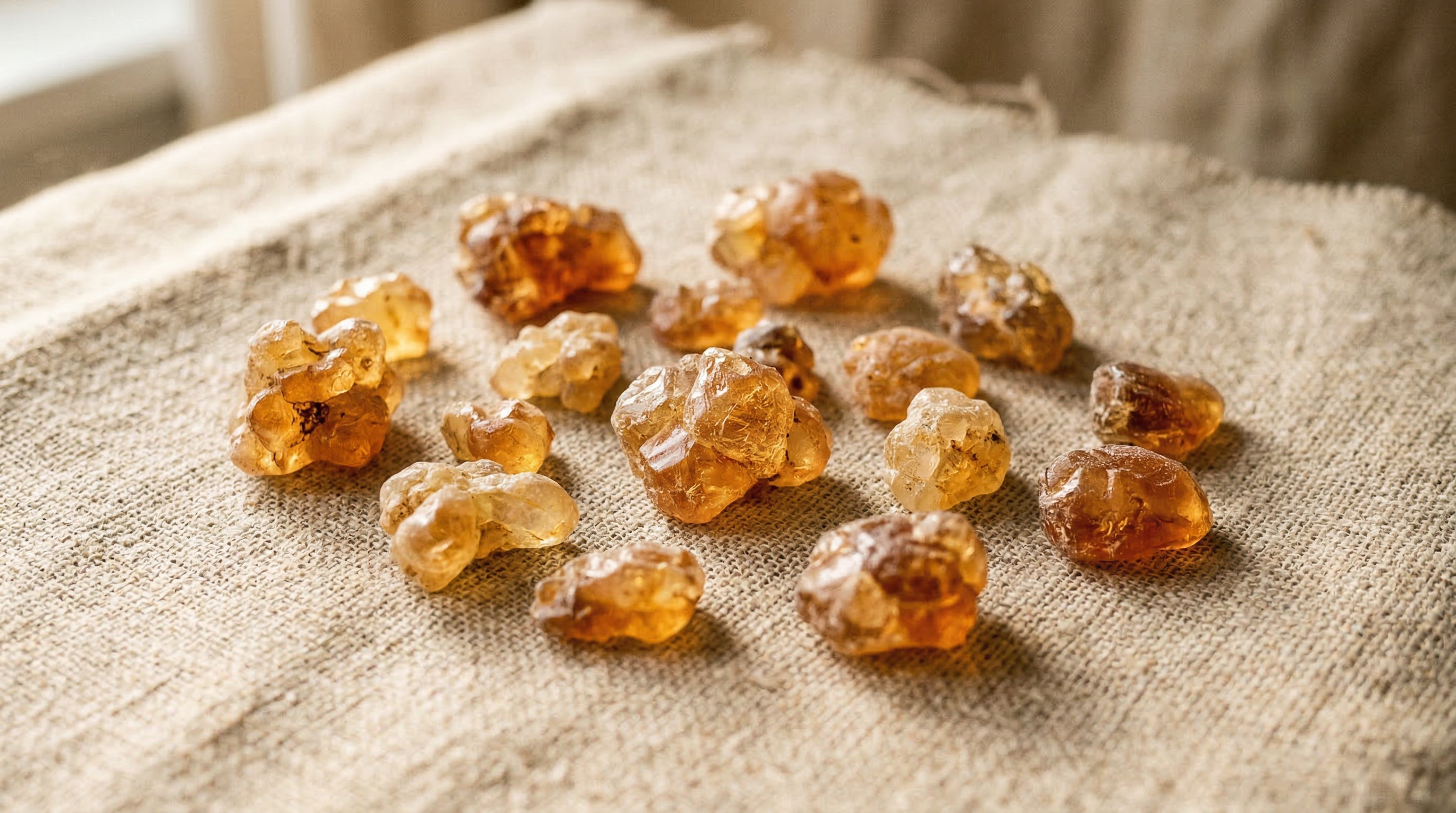
Yellow frankincense (known as Al Shaabi or "popular") is the most common type. Its tears are golden yellow to amber in color, smaller and sometimes less translucent. Its fragrance is warmer and more resinous, with woody notes. It is the most accessible and versatile grade, suitable for daily fumigation and aromatherapy. This is the frankincense we offer at realandroots.com under the name Olibanum Alba [internal link: /products/resine-doliban-jaune].
Red or brown frankincense comes from the first harvests or from low-lying areas. Its aromatic quality is inferior, but it is still used in industry (perfumery, cosmetics, pharmaceuticals) for the extraction of boswellic acids.
How to recognize genuine frankincense from Oman
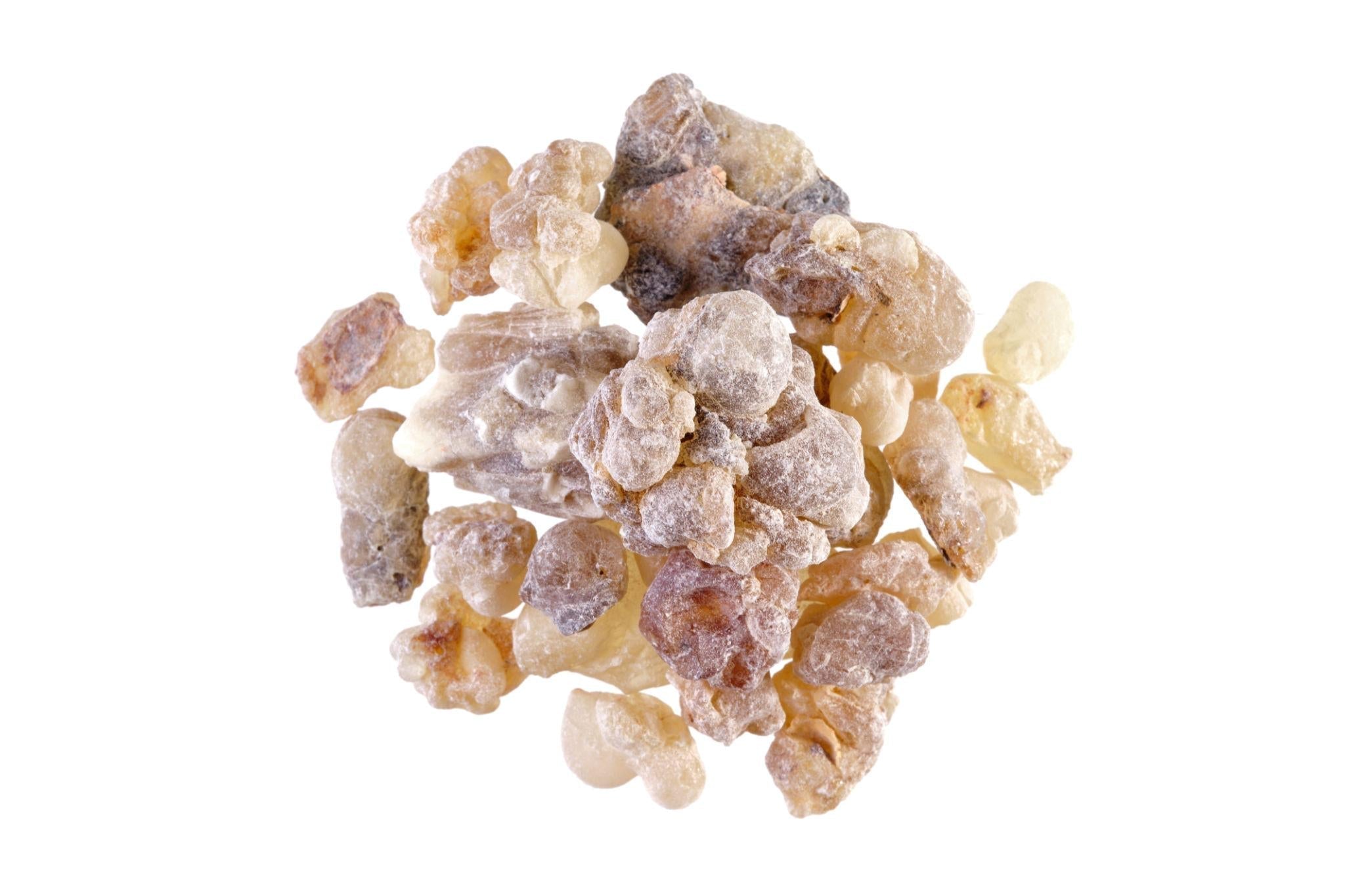
Color is the first indicator: higher grades are light (pale green, white, pale yellow), lower grades are darker (amber, brown). Translucency is a sign of purity: hold a drop up to the light—high-quality frankincense allows light to pass through partially.
The gum test: Omani frankincense is slightly sticky to the touch when fresh. If you chew it (a traditional practice in the Middle East), it softens within seconds and releases a bitter then refreshing taste. Poor-quality frankincense remains hard or crumbles. To learn more about this practice, see our guide to chewing frankincense.
Burning is the most revealing test: authentic Omani frankincense burns slowly on charcoal or a burner, releasing a light, aromatic white to bluish smoke. The fragrance evolves over time, with citrus notes at the top, followed by resinous and woody notes at the base. If the smoke is black, thick, or acrid, the product is not pure.
The origin must be traceable: a reputable seller will indicate the species (Boswellia sacra), the region (Dhofar, Oman), the grade, and, ideally, the name of the harvester or cooperative. Be wary of vague names such as "Oriental frankincense" or "premium incense" without any indication of origin.
How to use Oman frankincense in everyday life
On charcoal: this is the traditional method. Light a high-quality charcoal, wait until it is completely red (5 to 10 minutes), then place one or two drops of frankincense on top. The diffusion is intense and immediate, ideal for ceremonies and large spaces. See our complete guide to using frankincense resin.
Electric burner: the burner heats the resin at a low temperature without carbonizing it, producing a purer, longer diffusion without visible smoke. This is the preferred method for everyday use at home and for people who are sensitive to smoke.
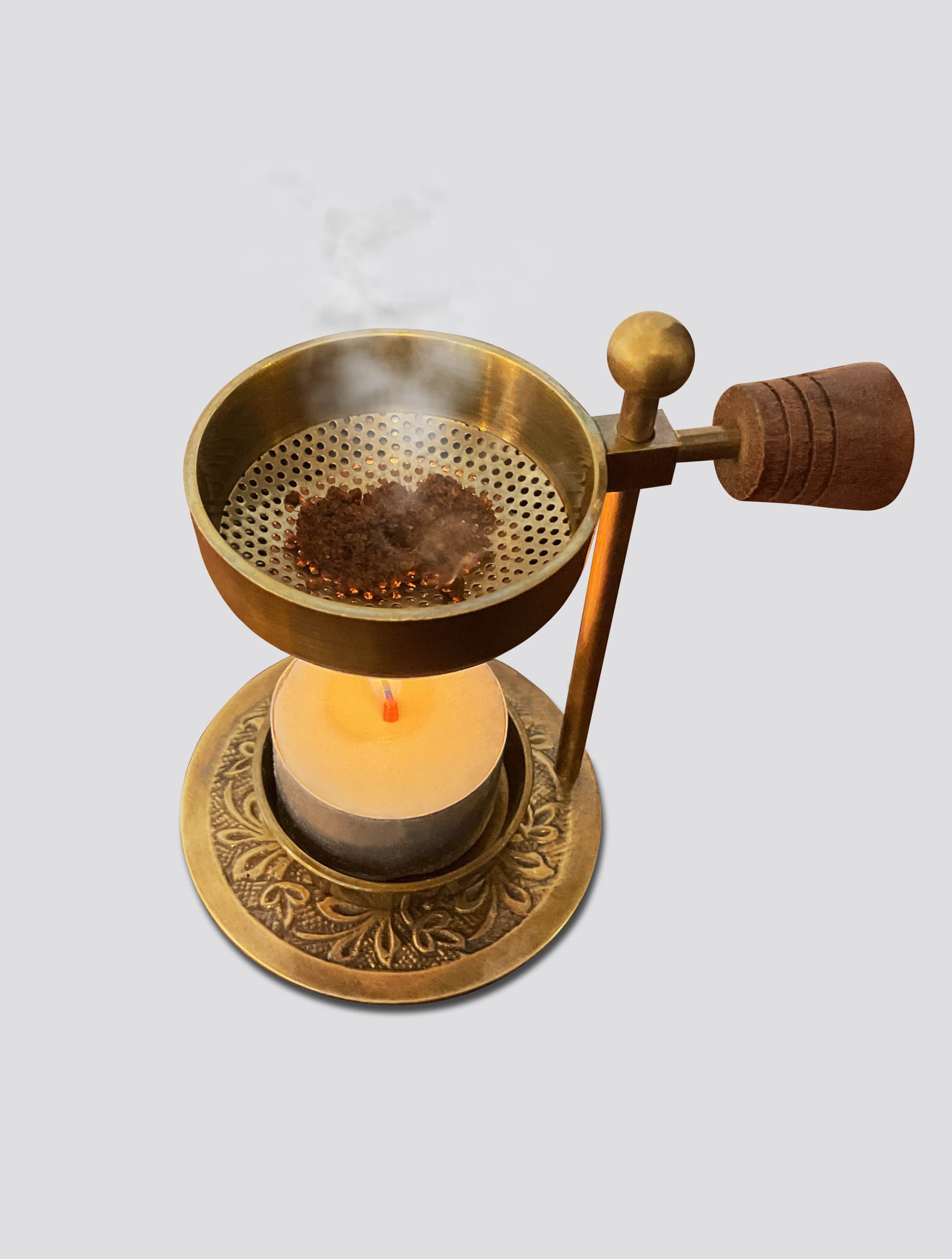
Indirect heat (candle holder): place the tears on a metal grid above an unscented tea light candle. The radiant heat diffuses the resin very gradually, revealing the most subtle notes. Diffusion can last 2 to 4 hours.
As an essential oil: frankincense essential oil, extracted by steam distillation, concentrates aromatic compounds and active ingredients. It can be used in atmospheric diffusion, diluted in a vegetable oil (argan, jojoba) for massage, or in cosmetic care. Discover our Oman frankincense essential oil:
Frequently Asked Questions
Why is Omani frankincense more expensive than other types?
Boswellia sacra grows in rocky areas that are difficult to access. Harvesting is done manually, seasonally, and the trees only produce high-quality resin after ten years. The highest grades (Hojari Royal) represent a tiny fraction of total production, which justifies their price.
Is Omani frankincense listed as a World Heritage Site?
The frankincense production sites in Dhofar (Khor Rori, Shisr, Al-Baleed) have been listed as UNESCO World Heritage Sites since 2000 under the name "Land of Frankincense." This refers to the archaeological and historical sites, not the resin itself.
What is the difference between Boswellia sacra and Boswellia carterii?
The two species are sometimes considered synonymous by some botanists, but most studies distinguish between them. Boswellia sacra is endemic to Oman and Yemen, while B. carterii grows mainly in Somalia. Their chemical profiles show measurable variations in terms of boswellic acid and terpene concentrations.

Can you chew Omani frankincense?
Yes, it is a common practice in the Middle East. Chewed frankincense softens and releases a bitter then refreshing taste. It is traditionally used for oral hygiene and digestion. A study has shown the antimicrobial effects of Boswellia serrata extract against Porphyromonas gingivalis, an oral pathogen (Almeida-da-Silva et al., 2024, PubMed: 38666917).
Discover our Oman frankincense—pure Olibanum Alba resin—at realandroots.com
Want to take it a step further?
Discover how to incorporate frankincense and natural resins into your daily routine to purify your space and create a moment of calm.
Discover the purification ritual